 |
Appointments:
Professor
Department of Pathology
Investigator, Howard Hughes
Medical Institute
Cancer Research Center
|
Education:
M.D., University of Paris VI, Paris,
1995
Ph.D., University of Paris VI, Paris, 1992
|
Contact:
Phone: (773) 834-8646
Fax: (773)
834-1999
E-Mail:
abendela@bsd.uchicago.edu
Address:
The University of Chicago
GCIS W506
929 East 57th Street
Chicago, Illinois 60637
|
Related Research Interests:
|
|
Albert Bendelac, M.D., Ph.D.
Interfaces Between Innate and Adaptive Immunity; Immune
Recognition of Glycolipids; CD1-mediated Glycolipid Antigen Presentation
Research Summary
CD1-mediated Antigen Presentation; Development and
Functions of Glycolipid-Specific T cells
T cell Responses Leading to Type I Diabetes in Mice and Humans
CD1-mediated Antigen Presentation - Development and
Functions of Glycolipid-Specific T cells
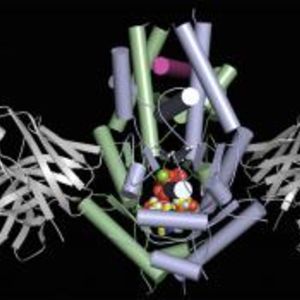
CD1-mediated Antigen Presentation. In parallel with the MHC antigen
presentation pathway, which presents protein antigens to T lymphocytes,
the CD1 pathway evolved to present lipid antigens. Because, microbes
can rapidly mutate their proteins but not their lipids to evade immune
recognition, these complementary strategies respond to different
evolutionary pressures. Our laboratory is exploring the biochemistry
and cell biology of glycolipid antigen processing and presentation by
CD1 molecules and the development, diversity and functions of
glycolipid-specific T cells, We have mapped several steps of the
intra-cellular pathway of CD1 trafficking and uncovered critical genes
involved in antigen processing and presentation in the endosomal
compartment. Most exciting is our recent discovery, in close
interdisciplinary collaboration with colleagues at Scripps Research
Institute and Brigham Young University, that saposins and other lipid
transfer proteins play crucial functions in assisting lipid exchange
between membrane compartments and CD1.
We
have also discovered that, in contrast with MHC-specific T cells, many
T cells with CD1-specific T cell receptors follow a developmental
pathway leading to a hybrid NK/T lineage. By developing fluorescent CD1
tetramers to label these cells, we were able to physically track their
developmental pathway at the single cell level and explore the cellular
interactions and signaling pathways involved. We are creating various
transgenic models in vivo in mice and in vitro in organ culture
systems, to further dissect the mechanisms underlying the development
and the function of glycolipid-specific T cells.
By
enhancing our understanding of the mechanisms underlying glycolipid
recognition by T cells, these studies might lead to various clinical
applications. The conservation of CD1 genes across species and the
limited ability of microbes to alter their lipids through gene mutation
suggest that 'universal' glycolipid-based vaccines and adjuvants might
be developed in the near future. In addition, CD1 regulates the immune
rejection of cancer and appear to prevent type I diabetes, providing
exciting avenues for basic as well as clinically applied research.
Type I Diabetes
Type I diabetes is a disease of world-wide importance, affecting 1% of
the American population during their lifetime, particularly in
childhood. The disease is caused by T cells that are aberrantly
directed against self-antigens expressed by insulin-producing cells in
the pancreas, a breakdown of tolerance to self. We are studying the
non-obese diabetic (NOD) mouse strain, which spontaneously expresses
type I diabetes by 12-24 weeks of age. We found that disease could be
transferred upon injection of T cells from diabetic mice into younger
healthy recipients, and that full blown diabetes required both CD4 and
CD8 T cells. We are focusing on two aspects of the disease process that
might be amenable to immune intervention in order to prevent disease.
Firstly, we are studying the diabetogenic CD8 T cells, the only
cell-type that can directly interact with the insulin-producing cells,
likely therefore to be the key downstream agent of this complex
autoimmune process. Secondly, we are studying the role of
CD1-restricted NKT cells, whose recruitment appears to protect against
disease. These approaches might lead to novel strategies aiming at
predicting and preventing disease in genetically predisposed
individuals.
Selected Papers
Y.-H. Chiu, J. Jayawardena, A. Weiss, D. Lee, S.-H. Park, A. Dautry-Varsat, A. Bendelac (1999). Distinct subsets of CD1d-restricted T cells recognize self antigens loaded in different cellular compartments. J. Exp. Med. 189:103-110.
S.-H. Park, D. Guy-Grand, F.A. Lemonnier, C.-R. Wang, A. Bendelac, B. Jabri. 1999. Selection and expansion of CD8aa+TCRab+ intestinal intraepithelial lymphocytes in the absence of both classical MHC class I and non classical CD1 molecules J Exp Med 190:885-890.
K. Benlagha, A. Weiss, A. Beavis, L. Teyton, A. Bendelac. 2000. In vivo identification of glycolipid antigen specific T cells using fluorescent CD1d tetramers. J. Exp. Med. 191:1895-1903
S.-H. Park and A. Bendelac. 2000. CD1-restricted T cell responses and microbial infection. Nature 406: 788-92
S.-H. Park, A. Weiss, K. Benlagha, T. Kyin, L. Teyton, A. Bendelac. 2001. The mouse CD1d restricted repertoire is dominated by a few autoreactive TCR families. J. Exp. Med. 193: 893-904
J. Jayawardena-Wolf, K. Benlagha, Y.-H. Chiu, R. Mehr and A. Bendelac 2001. CD1d endosomal trafficking is independently regulated by an intrinsic CD1d-encoded tyrosine motif and by the invariant chain. Immunity 15, 897-908.
Y.-H. Chiu, S.-H. Park, K. Benlagha, C. Forestier, J. Jayawardena-Wolf, P.B. Savage, L. Teyton, A. Bendelac. 2002. Multiple defects in antigen presentation and T cell development by mice expressing cytoplasmic tail-truncated CD1d. Nature Immunology 3, 55-60.
P.T. Lee, K. Benlagha, L. Teyton, A. Bendelac. Distinct functional lineages of human Va24 NKT cells. 2002. J. Exp. Med 195, 637-41
A. Bendelac, R. Medzhitov. 2002. Adjuvants of Immunity: Harnessing Innate Immunity To Promote Adaptive Immunity. J. Exp. Med., 195, 19-23
K. Benlagha, T. Kyin, A. Beavis, L. Teyton, A. Bendelac. 2002. A thymic precursor to the NKT cell lineage. Science 296, 553-555
K. Honey, K. Benlagha, C. Beers, K. Forbush, L. Teyton, A.Y. Rudensky, A. Bendelac. 2002. Thymocyte expression of cathepsin L is critical for NK T cell development. Nature Immunol, 3, 1069-1074
C. Forestier, S.-H. Park, D. Wei, K. Benlagha, L. Teyton, A. Bendelac.2003. T cell development in mice expressing CD1d directed by a classical MHC class II promoter. J. Immunol. 171, 4096-4104
D. Zhou*, C. Cantu III*, Y. Sagiv, N. Schrantz, A.B. Kulkarni, X. Qi, D.J. Mahuran, C.R.Morales, G.A. Grabowski, K. Benlagha, P.B. Savage, A. Bendelac@, L. Teyton@. 2004. Editing of CD1-bound lipid antigens by endosomal lipid transfer proteins. Science 303, 523-7 * Co-first authors, @ co-senior authors
D. Zhou, J. Mattner, C. Cantu III, N. Schrantz, N. Yin, Y. Gao, Y. Sagiv, K. Hudspeth, Y. Wu, T. Yamashita, S. Teneberg, D. Wang, R. Proia, S.B. Levery, P.B. Savage, Luc Teyton, A. Bendelac. 2004. Lysosomal glycosphingolipid recognition by NKT cells. Science 306, 1786-9
J. Mattner, K.L. DeBord, N. Ismail, R.D. Goff, C. Cantu III, D. Zhou, P. Saint-Mezard, V. Wang, Y. Gao, N. Yin, K. Hoebe, O. Schneewind, D. Walker, B. Beutler, L. Teyton, P.B. Savage*, A. Bendelac*. 2005. Both exogenous and endogenous glycolipid antigens activate NKT cells during microbial infections. Nature 434, 525-9 *co-senior authors
C. Borowski, A. Bendelac. 2005. Signaling for NKT cell development: the SAP-Fyn connection. J. Exp. Med. 201, 833-6
T. Egawa, G. Eberl, I. Taniuchi, K. Benlagha, F. Geissmann, L. Hennighausen, A. Bendelac, D.R. Littman. 2005. Genetic evidence supporting selection of the Va14i NKT cell lineage from double positive thymocyte precursors. Immunity 22, 705-716
D.G. Wei, H. Lee, S.-H. Park, L. Beaudoin, L. Teyton, A. Lehuen, A. Bendelac. Expansion and long range differentiation of the NKT cell lineage in mice expressing CD1d exclusively on cortical thymocytes. 2005. J. Exp. Med. 202, 239-48
D.M. Zajonc, C. Cantu III, J. Mattner, D. Zhou, P.B. Savage, A. Bendelac, I.A. Wilson, L. Teyton. 2005. Structure and function of a potent agonist for the semi-invariant NKT cell receptor. Nature Immunol. 6, 810-8
K. Benlagha, D.G. Wei, J. Veiga, L. Teyton, A. Bendelac. 2005. Characterization of the early stages of thymic NKT cell development. J. Exp. Med. 202, 485-92
D.G. Wei, S.A. Curran, P.B. Savage, L. Teyton, A. Bendelac. 2006. Mechanisms imposing the Vb bias of Va14 NKT cells and consequences for microbial glycolipid recognition. J. Exp. Med. 203, 1197-1207.
Y. Sagiv, K. Hudspeth, J. Mattner, N. Schrantz, R.K. Stern, D. Zhou, P.B. Savage, L. Teyton, A. Bendelac. 2006. Impaired glycosphingolipid trafficking and NKT cell development in mice lacking Niemann-Pick type C1 (NPC1) protein. J. Immunol [Cutting Edge] 177, 26-30.
N. Schrantz, Y. Sagiv, Y. Liu, P.B. Savage, A. Bendelac, L. Teyton. 2007. The Niemann-Pick type C2 protein loads isoglobotrihexosylceramide onto CD1d molecules and contributes to the thymic selection of NKT cells. J. Exp. Med. 204, 841-52
Y. Sagiv, L. Bai, D.G. Wei, R. Agami, P.B. Savage, L. Teyton, A. Bendelac. 2007. A distal effect of microsomal triglyceride transfer protein deficiency on the lysosomal recycling of CD1d. J. Exp. Med. 204, 921-8
X Long, Deng S, Mattner J, Zang Z, Zhou D, McNary N, Goff RD, Teyton L, Bendelac A, Savage PB. 2007. Synthesis and evaluation of stimulatory properties of Sphingomonadaceae glycolipids. Nat Chem Biol. 3:559-64
J Novak, Beaudoin L, Park S, Griseri T, Teyton L, Bendelac A, Lehuen A. 2007. Prevention of type 1 diabetes by invariant NKT cells is independent of peripheral CD1d expression. J Immunol. 178:1332-40
Allende ML, Zhou D, Kalkofen DN, Benhamed S, Tuymetova G, Borowski C, Bendelac A, Proia RL. 2007. S1P1 receptor expression regulates emergence of NKT cells in peripheral tissues. FASEB J. Sept. 4, 2007
K. Griewank, C. Borowski, S. Rietdijk, A. Julien, D.G. Wei, A.A. Mamchak, C. Terhorst, A. Bendelac. 2007. Homotypic interactions mediated by Slamf1 and Slamf6 control NKT lineage development. Immunity. 27:751-62
Mattner J, Savage PB, Leung P, Oertelt SS, Wang V, Trivedi O, Scanlon ST, Pendem K, Teyton L, Hart J, Ridgway WM, Wicker LS, Gershwin ME, Bendelac A. Liver autoimmunity triggered by microbial activation of natural killer T cells. Cell Host Microbe. 2008 May 15;3(5):304-15.
Zajonc DM, Savage PB, Bendelac A, Wilson IA, Teyton L. Crystal structures of mouse CD1d-iGb3 complex and its cognate Valpha14 T cell receptor suggest a model for dual recognition of foreign and self glycolipids. J Mol Biol. 2008 Apr 4;377(4):1104-16.
Liu Y, Deng S, Bai L, Freigang S, Mattner J, Teyton L, Bendelac A, Savage PB. Synthesis of diglycosylceramides and evaluation of their iNKT cell stimulatory properties. Bioorg Med Chem Lett. 2008 May 15;18(10):3052-5
Li Y, Teneberg S, Thapa P, Bendelac A, Levery SB, Zhou D. Sensitive detection of isoglobo and globo series tetraglycosylceramides in human thymus by ion trap mass spectrometry. Glycobiology. 2008 Feb;18(2):158-65.
Savage AK, Constantinides MG, Han J, Picard D, Martin E, Li B, Lantz O, Bendelac A. The Transcription Factor PLZF Directs the Effector Program of the NKT Cell Lineage. Immunity. 29:391-403.
|
Faculty and Research
Programs
|