Appointments:

Associate Professor
Ben May Department for Cancer Research
Department of Pathology
Department of Medicine
Section of Hematology/Oncology
Cancer Research Center

Committee on Cancer Biology
Committee on Immunology
Committee on Molecular Medicine/MPMM

Education:

Ph.D., The University of Chicago, 1991

M.D., The University of Chicago, Pritzker
     School of Medicine, 1989

B.A., The University of Chicago, 1984

Contact:

Phone:  (773) 702-4601

Fax:       (773) 702-3163

E-Mail: tgajewsk@medicine.bsd.uchicago.edu

Address:

The University of Chicago
GCIS W436
929 East 57th Street
Chicago, Illinois 60637

Website (Ben May)

Related Research Interests:

Signal Transduction

T/B Cell Development

Tumor Biology/Immunology/
Immunotherapy

Thomas Gajewski, M.D., Ph.D.


Regulation of T-cell Activation, T-cell Signaling, Tumor Immunology, Immunotherapy of Melanoma

Research Summary

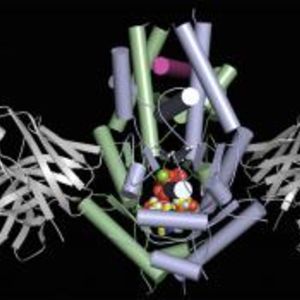
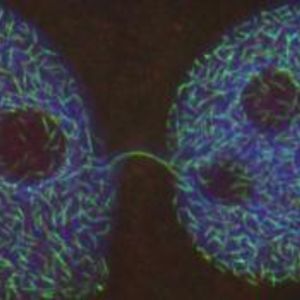
Our laboratory studies the molecular and cellular regulation of T lymphocyte activation and differentiation, and in turn applies this information to preclinical and clinical efforts to promote anti-tumor immunity in vivo.

T Lymphocyte Biology

Naive T cells that have never seen antigen lack effector function and must acquire such functions through a differentiation process. Initial activation depends on engagement of the T cell receptor (TCR) as well as additional receptor/ligation interactions that influence the quantity and quality of the T cell response. Positive regulatory influences include CD28 engagement by B7, and negative regulatory processes include ligation of CTLA4 or by induction of an unresponsive state termed anergy. In addition to this quantitative level of control, T cell activation is also qualitatively influenced by exogenous cytokines that promote differentiation down distinct lineages of effector cell phenotype having specialized functions. We study the molecular and biochemical events that mediate regulation of T cells in the naive, effector, and anergic states, as well as the process of transitioning from one state to another. These experiments rely upon mutagenesis and viral transduction techniques, transgenic and knockout mice, and a variety of cellular immunology approaches.

Regulation of Anti-tumor Immunity

Recent work has suggested that most tumors express antigens that can be recognized as foreign by specific T cells. How and why tumors than grow and escape immune destruction has become a central problem in cancer biology. We hypothesize that part of the defect may be due to inappropriate T cell differentiation or the dominant effects of negative regulatory influences on T cell activation. In order to determine the factors necessary for tumor rejection when it successfully occurs, we study the rejection of immunogenic tumors in knockout mice lacking individual molecules expected to affect specific aspects of T cell activation and differentiation. To examine which factors are sufficient to induce anti-tumor immunity, we supply these factors in antigen-specific vaccination strategies to promote rejection of established tumors in mice. Successful preclinical tumor vaccine results are then applied to clinical trials in the melanoma clinic which I also direct. Other immunologic manipulations are explored in our clinical cancer immunotherapy group.


Selected Papers

Blank C, Brown I, Peterson AC, Spiotto M, Iwai Y, Honjo T, Gajewski TF.  PD-L1 inhibits the effector phase of tumor rejection by TCR transgenic CD8+ T cells.  Cancer Res 64:1140-1145, 2004.

Rivas F, Alegre M, O’Keefe J, Gajewski TF.  The actin cytoskeleton regulates calcium dynamics and NFAT nuclear duration.  Mol Cell Biol 24:1628-1639, 2004.

O’Keefe J, Blaine K, Alegre M, Gajewski TF.  cSMAC formation is not required for activation of naive CD8+ T cells.  Proc Natl Acad Sci 101:9351-9356, 2004.

Cham C, Gajewski TF.  Glucose availability regulates IFN-γ production and p70S6K in CD8+ effector T cells.  J Immunol 174:4670-4677, 2005.

O’Keefe J, Gajewski TF.  Cutting Edge: Cytotoxic granule polarization and cytolysis can occur without cSMAC formation in CD8+ effector T cells.  J Immunol 175:5581-5585, 2005.

Harlin H, Peterson AC, Kuna T, Gajewski TF.  Tumor progression despite massive influx of activated CD8+ T cells in a patient with malignant melanoma ascites.  Cancer Immun Immunother 9:1-13, 2006.

Gajewski TF, Meng Y, Harlin H.  Immune suppression in the tumor microenvironment.  J Immunotherapy 29:233, 2006.

Brown IE, Blank C, Kline J, Kacha A, and Gajewski TF.  Homeostatic proliferation as an isolated variable reverses T cell anergy and promotes tumor rejection in vivo.  J. Immunol 177:4521, 2006.

Zha Y, Marks R, Ho A, Peterson A, Brown I, Janardha S, Praveen K, Stang S, Stone J, and Gajewski TF.  T cell anergy is reversed by active Ras and regulated by diacylglycerol kinase-α.  Nature Immunology 7:1166, 2006.

Marks RE, Berk S, Ho A, Kuna T, and Gajewski TF.  Farnesyltransferase inhibitors inhibit T cell cytokine production at the post-transcriptional level.  Blood 110:1982, 2007. 

Yu, P., Lee, Y., Wang, Y., Christiansen, P., Liu, X., Gajewski, T.F., Schreiber, H., Wang, X., and Fu, Y-X.  Targeting the primary tumor to generate CTL for the effective eradication of spontaneous metastases.  J. Immunol. 179:1960. 2007.

Zha, Y., and Gajewski, T.F.  An adenoviral vector encoding dominant negative Cbl lowers the threshold for T cell activation in post-thymic T cells.  Cell. Immunol.  247:95.  2007.

Zha, Y., Shah, R., Locke, F., Wong, A., and Gajewski, T.F. Use of Cre-adenovirus and CAR transgenic mice to efficiently delete genes in post-thymic T cells.  J. Immunol. Methods.  331:94.  2008.

Kline, J., Brown, I., Zha, Y., Blank, C., Strickler, J., Wouters, H., Zhang, L., and Gajewski, T.F.  Homeostatic proliferation plus regulatory T cell depletion promotes potent rejection of B16 melanoma. Clin. Can. Res.  14:3156.  2008.

Lee, R., Fallarino, F., Ashikari, A., and Gajewski, T.F. Melanoma presenting as circulating tumor cells associated with failed angiogenesis.  Melanoma Res.  18:289.  2008. 

Gajewski, T.F.  The expanding universe of regulatory T cells in cancer.  Preview/commentary. Immunity.  27:185.  2007.
Gajewski, T.F.  Failure at the effector phase: immune barriers at the level of the tumor microenvironment.  Clin. Can. Res.  13:5256. 2007.
Zheng, Y., Zha, Y., and Gajewski, T.F.  Molecular regulation of T cell anergy.  EMBO Reports. Dec 26.  2007.

Yu, P., Lee, Y., Wang, Y., Christiansen, P., Liu, X., Gajewski, T.F., Schreiber, H., Wang, X., and Fu, Y-X.  Targeting the primary tumor to generate CTL for the effective eradication of spontaneous metastases.  J. Immunol. 179:1960. 2007.

 Zha, Y., and Gajewski, T.F.  An adenoviral vector encoding dominant negative Cbl lowers the threshold for T cell activation in post-thymic T cells.  Cell. Immunol.  247:95.  2007.

Zha, Y., Shah, R., Locke, F., Wong, A., and Gajewski, T.F. Use of Cre-adenovirus and CAR transgenic mice to efficiently delete genes in post-thymic T cells.  J. Immunol. Methods.  331:94.  2008.

Kline, J., Brown, I., Zha, Y., Blank, C., Strickler, J., Wouters, H., Zhang, L., and Gajewski, T.F.  Homeostatic proliferation plus regulatory T cell depletion promotes potent rejection of B16 melanoma. Clin. Can. Res.  14:3156.  2008.

Lee, R., Fallarino, F., Ashikari, A., and Gajewski, T.F. Melanoma presenting as circulating tumor cells associated with failed angiogenesis.  Melanoma Res.  18:289.  2008. 

Gajewski, T.F.  The expanding universe of regulatory T cells in cancer.  Preview/commentary. Immunity.  27:185.  2007.

Gajewski, T.F.  Failure at the effector phase: immune barriers at the level of the tumor microenvironment.  Clin. Can. Res.  13:5256. 2007.

Zheng, Y., Zha, Y., and Gajewski, T.F.  Molecular regulation of T cell anergy.  EMBO Reports. Dec 26.  2007. Cham CM, Driessens G, O'Keefe JP, Gajewski TF. Glucose deprivation inhibits multiple key gene expression events and effector functions in CD8(+) T cells. Eur J Immunol. Sep 15;38(9):2438-2450. 2008. 


Faculty and Research

Programs

Cancer Biology


CCB

Immunology


CCB

Microbiology


CCB

Molecular Metabolism
& Nutrition


CCB

Molecular Pathogenesis and
Molecular Medicine


CCB