Tatyana V. Golovkina, Ph.D.
Retroviruses to Study Different Aspects of Retrovirus-host
Interactions, Including the Anti-virus Immune Response and the Genetics
of Resistance to Retroviral Infection and to Virally Induced Tumors.
Elucidation of the Mechanism of Retroviral Pathogenesis is of
Fundamental Importance, as it Will Ultimately Lead to Increased
Knowledge About the Anti-virus Immune Reponse in General and Variations
in Susceptibility to Viral Infections in Humans
Research Summary
A proper host defense against viral pathogens exists at
two levels: the innate immune response, and adaptive immunity resulting
in long-lasting protective immunity. Most viruses evade both innate and
adaptive immunity, and in some cases certain aspects of a normal
protective host response have been redirected or modified to the
advantage of these viruses. Despite viral subversion of the immune
response, most viral infections result in virus clearance and induce
lasting protective immunity, or are adequately controlled by an
adaptive immune response. However, infection with retroviruses seems
rarely, if ever, to lead to an immune response that can prevent ongoing
virus replication. As with all infectious processes, susceptibility to
retroviral pathogenesis and tumorigenesis are both controlled by the
genetic background of the host. We are using Mouse Mammary Tumor Virus
(MMTV) to study different aspects of retrovirus-host interactions,
including the anti-virus immune response and the genetics of resistance
to retroviral infection and to virally induced tumors.
Mechanisms of Resistance to
Retroviral Infection
Although antibody production often plays an important
role in the clearance of viral infections, this is not the case for
many retroviruses, including human immunodeficiency virus (HIV).
Selection of immune escape variants impairs the ability of the immune
system to sustain an efficient antiviral response and to control
retroviral infections. Like other retroviruses, MMTV is not efficiently
eliminated by the immune system of susceptible mice. In contrast,
MMTV-infected I/LnJ mice are capable of producing IgG2a
virus-neutralizing antibodies, sustaining this response throughout
their life, and secreting these antibodies into their milk, blocking
infection of their progeny. We have determined that MMTV virions
produced by neonatally infected I/LnJ mice are absolutely avirulent and
do not establish productive infection even in mice from susceptible
strains. Because viruses produced by infected I/LnJ cells were not
capable of re-infecting, I/LnJ mice were resistant to MMTV-induced
mammary tumors. Viruses produced by MMTV-infected I/LnJ mice were found
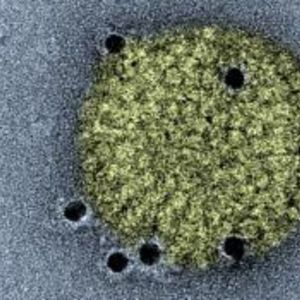
to be coated with anti-MMTV antibodies of IgG2a isotype. The same
antibodies were found in the sera of infected I/LnJ mice and were
capable of neutralizing MMTV infection. Resistance to MMTV infection is
dependent on IFNg production, as I/LnJ mice with targeted deletion of
the Ifng gene failed to produce any virus-neutralizing antibodies.
The mechanism of resistance to MMTV infection in I/LnJ
mice is recessive, since infected F1 mice obtained from crosses between
resistant I/LnJ mice and susceptible C3H/HeN mice were susceptible to
MMTV infection and MMTV-induced mammary tumors. When these infected F1
females were backcrossed to I/LnJ males producing an N2 generation, 75
percent of these mice were found to be resistant because they produced
antibodies against MMTV, whereas 25 percent of the mice were found to
be susceptible, because they did not produce antibodies against MMTV
and succumbed to mammary tumors. Subsequent analysis of mice from
generations N3 and N4 demonstrated that two phenocopying genes control
the mechanism of resistance inherited by I/LnJ mice. We refer to these
gene loci as vic1 and vic2, which stands for virus infectivity
controller 1 and 2.
To map the location of the vic genes, a genome-wide
screen was performed with 50 susceptible and 50 resistant N2 mice with
markers at every 10 to 15 cM. vic1 and vic2 have been mapped to
chromosome 17 and chromosome 15, respectively. Understanding the
mechanism of the antivirus immune response in I/LnJ mice is of great
importance, because if we knew how to make the immune response against
HIV and other human retroviruses as robust and sustained, we would be
better able to treat the diseases caused by these retroviruses.
Subversion of the Innate
Immune System by Retroviruses
MMTV does not encode an oncogene and induces tumors by
acting as an insertional mutagen that activates expression of cellular
protooncogenes. Several lines of evidence suggest that additional
events are also necessary for MMTV-induced mammary tumorigenesis. An
MMTV variant found in C3H/HeJ mice [MMTV(HeJ)] does not cause tumors,
while MMTV(C3H) found in C3H/HeN mice does. We showed that MMTV(HeJ) is
a recombinant virus between MMTV(C3H) and endogenous Mtv1 present in
all C3H substrains. The tumor-attenuating sequences of MMTV(HeJ) have
been mapped to the gag gene of the virus.
Generation of MMTV(HeJ) from MMTV(C3H) and Mtv1 and its
subsequent selection in C3H/HeJ mice can be reproduced experimentally,
suggesting a selective pressure against MMTV(C3H) in C3H/HeJ mice. Our
preliminary data indicate that this mechanism is determined by a
dominant-negative mutation in the innate immune Toll-like receptor 4
(Tlr4) gene and is influenced by antivirus immune responses. TLR
receptors bind to conservative products of microbial cell metabolism
and viruses. This interaction triggers the nuclear factor (NF)-kB
transcription factor, which upregulates expression of the costimulatory
molecules and cytokines necessary for the activation of adaptive immune
responses.
We showed that interaction of MMTV with wild type TLR4
enables the virus to induce production of the immunomodulatory cytokine
IL10 and thereby block the anti-virus adaptive immune response. The
dominant negative mutation of the Tlr4 gene found in C3H/HeJ mice
renders MMTV(C3H) unable to upregulate IL10 and suppress the immune
response, and thus results in selection of immune escape recombinant
MMTV(HeJ). This is the first example of a pathogen subverting innate
immunity for its own benefit. Therefore, eliciting the mechanism of
retrovirus interaction with innate immunity will undoubtedly provide a
basis for the treatment of retrovirally induced diseases in animals and
humans.
Selected Papers
Hook LM, Jude B, Ter-Grigorov VS, Hartley JW, Morse HC
III, Chervonsky AV, Golovkina TV. (2002). Characterization of a novel
murine retrovirus mixture that facilitates hematopoiesis. J Virol, 76
(23), 12112-12122.
Purdy A, Case L, Duvall M, Monnier N, Chervonsky A,
Golovkina T. (2003). Unique resistance of I/LnJ mice to a retrovirus is
due to sustained IFN-gamma-dependent production of virus neutralizing
antibodies. J. Exp. Med. 197 (2), 233-243.
Jude B, Pobezinskaya H, Bishop J, Parke S, Medzhitov R,
Chervonsky AV, Golovkina TV. (2003). Subversion of the innate immune
system by a retrovirus. Nature Immunology, 4(6), 573578.
Pobezinskaya Y, Chervonsky AV, Golovkina TV. (2004).
Early
stages of mammary tumor virus infection are superantigen-independent. J
Immunol 172, 5582-5587.
Case LK, Purdy A. and Golovkina TV. (2005). Molecular
and
cellular basis of the retrovirus resistance in I/LnJ mice. J Immunol,
175:7543-7549.
Case LK, Petell L, Yurkovetskiy L, Purdy A, Savage KJ,
Golovkina TV. (2008) Replication of beta- and gammaretroviruses
is restricted in I/LnJ mice via the same genetic mechanism. J
Virol. Feb;82(3):1438-47.
Swanson I, Jude B, Zhang AR, Smith ZE, Pucker A and
Golovkina TV. Sequences within the gag gene of mouse mammary tumor
virus needed for mammary gland cell transformation. Under revision in J
Virology.
MacDearmid C, Starling CL, Case LK, Golovkina TV.
Gradual elimination of a retrovirus by YBR/Ei mice. Under revision in J
Virology.
|