|
|
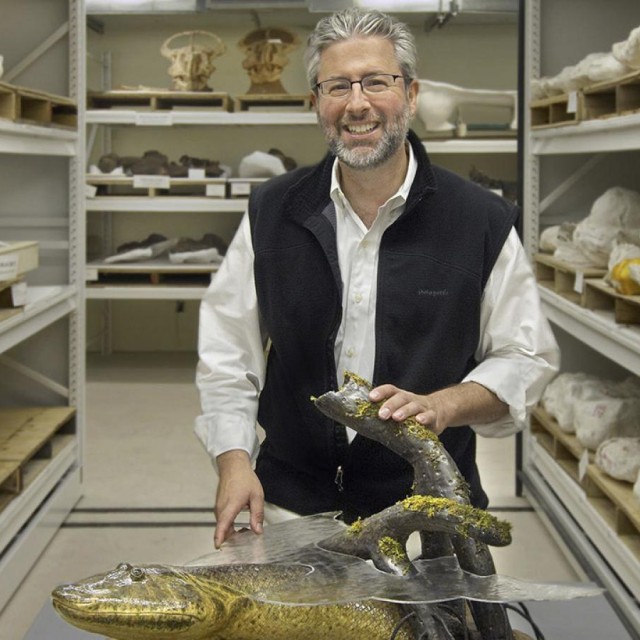
Christopher M. Gomez, M.D., Ph.D.
Molecular and Genetic Causes of Neurodegenerative
Disease
Research Summary
Christopher M. Gomez concentrates his research program on the molecular
and cellular mechanisms of neurodegenerative disease, with a particular
focus on the means by which genetic mutations in ion channels or other
essential proteins lead to dominantly inherited neurodegenerative
diseases. In dominantly-inherited neurodegenerative diseases neuronal
death arises because the genetic mutation alters, sometimes quite
subtly, rather than abolishes the function of the disease protein.
Altered function of ion channel molecules, proteins that are critical
to neuronal activity, can impair neuronal viability through a variety
of mechanisms. His laboratory pursues two primary project avenues, one
on the genetics and pathogenesis of the slow-channel syndrome, a model
disease of excitatory synaptic degeneration, the other representing a
similar focus on genetically-determined spinocerebellar ataxias (SCA).
Several forms of SCA are associated with mutations in ion channel
genes. He also helps lead the Cooperative Ataxia Group, a national
consortium of ataxia specialists devoted to enhancing clinical research
in ataxia and launching clinical trials for the SCAs.
The slow-channel syndrome is a chronic, usually congenital
neuromuscular disease that causes progressive fatigability and weakness
sometimes leading to death through respiratory failure. The disease is
due to mutations in the genes that encode the acetylcholine receptor of
the neuromuscular junction and thus is passed from parent to offspring.
The mutations alter the acetylcholine receptor function making it
leaky, which causes the neuromuscular synapse to become overloaded with
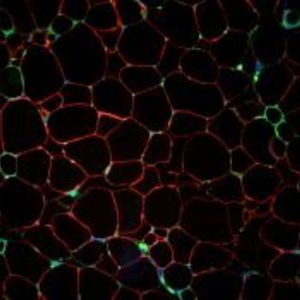
sodium and calcium ions. The Gomez group has used both patient biopsy
material and transgenic mouse models to determine that the degenerative
process involves both pre and post synaptic structures and degenerative
pathways that include the activation of several cysteine proteases. His
group is currently developing therapeutic strategies using genetic
approaches to selectively block these degenerative pathways in the
muscle fibers.
Spinocerebellar ataxia type 6 (SCA6) is a form of progressive
cerebellar ataxia appearing in middle age that gradually leads to total
incapacitation due to severe incoordination of all motor functions.
Severe imbalance and gait instability progresses to wheelchair
confinement. Oropharyngeal and upper limb incoordination disrupt the
ability to perform activities of daily living including speaking,
eating, and grooming. Erratic eye movements impair vision. The disease
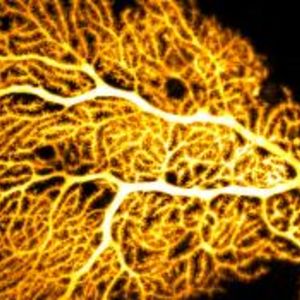
is associated with progressive degeneration of the cerebellar Purkinje
cells and is due to a mutation in a gene encoding the major calcium
channel of the cerebellum. The Gomez group has found that this
mutation, which is a type called an expanded polyglutamine (polyQ)
tract that is seen in other neurodegenerative diseases, alters the
function of calcium channel protein in at least two fashions. First, as
with the slow-channel syndrome, the expanded polyQ tract makes the
calcium channel leaky, potentially leading to calcium overload of
Purkinje cells and activation of degenerative pathways as is seen in
that disorder. More importantly, they have discovered that the C
terminal portion of the calcium channel that contains the polyQ tract
is actually a form of nuclear signaling protein that is cleaved from
the channel and transported to the nucleus. C terminal calcium channel
proteins that contain the expanded polyQ tract are toxic to neurons and
appear to cause damage by disturbing the DNA repair pathways. The Gomez
lab is now delineating the normal and pathological actions of the
calcium channel C terminus using biochemical cellular and genetic
approaches.
Selected Papers
Anderson, J.H., Christova, P., Xie, T-D., Schott, K., Ward, K., Gomez,
C.M. Spinocerebellar ataxia in monozygotic twins. (2002) Archives of
Neurology 59:1945-1951.
Bushara, K.O., Nance, M., Gomez, C.M. Anti-gliadin antibodies in
Huntington’s disease. (2004) Neurology, 62(1):132-3.
Maschke M., Oehlert G. Xie TD, Perlman, S., Subramony S. H., Kumar, N.,
Ptacek LJ, Gomez C.M. Clinical Feature Profile of Spinocerebellar
Ataxia Type 1-8 Predicts Genetically Defined Subtypes. (2005) Movement
Disorders. 20(11):1405-12.
Yu, G.Y., Howell, M.J., Roller, M.J., Xie, T-D, Gomez, C.M.
Spinocerebellar ataxia type 26 maps to chromosome 19p13.3 adjacent to
SCA6. (2005) Annals of Neurology 57(3):349-354.
Vohra, B.P.S., Zayas, R. , Groshong, J.S., Wollmann, R.L. Gomez, C.M.
Activation of apoptotic pathways in muscle fibers is circumscribed and
reversible in a slow-channel syndrome model. (2006) Neurobiology of
Disease 23:462-470.
Navedo MF, Lasalde-Dominicci JA, Baez-Pagan CA, Diaz-Perez L, Rojas LV,
Maselli RA, Staub J, Schott K, Zayas R, Gomez C.M. Novel beta subunit
mutation causes a slow-channel syndrome by enhancing activation and
decresing the rate of agoist dissociation. (2006) Mol Cell Neurosci. 32
(1-2): 82-90.
Lynch, D.R., Farmer, J.M., Tsou, A., Perlman, S., Subramony, S.H.,
Gomez, C.M., Ashizawa, T., Wilmot, G.R., Wilson, R.B., and Balcer, L.J.
Measuring Friedreich Ataxia: complementary features of examination and
performance measures. (2006) Neurology 66 (11): 1711-6.
Kordasiewicz, H.B., Thompson, R.M., Clark, H.B. and Gomez, C.M.
C-termini of P/Q-type Ca2+ channel alpha1A subunits are cleaved,
translocate to nuclei and promote polyglutmine-mediated toxicity.
(2006) Hum Mol Genet. 15 (10):1587-99.
Howell MJ, Mahowald MW, Gomez C.M. Evaluation of sleep and daytime
somnolence in spinocerebellar ataxia type 6 (SCA6). (2006) Neurology 66
(9): 1430-1.
Zayas, R., Navedo, M., Lasalde-Dominicci, J.A, and Gomez C.M.
Macroscopic properties of spontaneous mutations in slow-channel
syndrome: correlation by domain and disease severity. (2006) Synapse
60:441-49.
Zayas, R., Groshong, J.S. and Gomez, C.M. Inositol-1,4,5-triphosphate
receptors mediate activity-induced synaptic Ca2+ overload in
slow-channel syndrome. (2007) Cell Calcium, 41(4):343-52.
Raike RS, Kordasiewicz HB, Thompson RM, Gomez CM. Dominant-negative
suppression of Cav2.1 currents by alpha(1)2.1 truncations requires the
conserved interaction domain for beta subunits. Mol Cell Neurosci.
(2007) 34(2):168-77.
Kordasiewicz HB, Gomez CM. Molecular pathogenesis of spinocerebellar
ataxia type 6. Neurotherapeutics. (2007) 4(2):285-94.
Groshong JS, Spencer MJ, Bhattacharyya BJ, Kudryashova E, Vohra BP,
Zayas R, Wollmann RL, Miller RJ, Gomez CM. Calpain activation impairs
neuromuscular transmission in a mouse model of the slow-channel
myasthenic syndrome. J Clin Invest. (2007) 117(10):2903-12.
|
Faculty and Research
Programs
|