
Biomedical Sciences

Cancer Biology
Exploring novel scientific mechanisms that explain the etiology, progression and treatment of cancer as a disease

Immunology
Understanding mechanisms of immunity and their applications to diseases
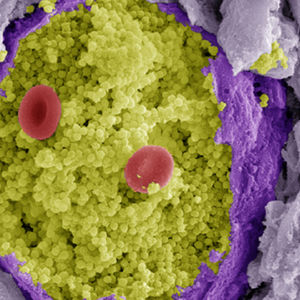
Microbiology
Understanding microbial life forms and their relevance to human and environmental health

Molecular Metabolism and Nutrition
Molecular and biochemical studies of uptake, clearance, storage and utilization

Darwinian Sciences

Evolutionary Biology
Interdisciplinary study of organisms, ecosystems across time and organizational scales

Ecology & Evolution
Ecological and evolutionary processes, with a strong emphasis on theoretical underpinnings

Integrative Biology
Investigating biological structure, function, development, and evolution at the organismal level

Independent Programs

Biophysical Sciences
Interdisciplinary dual-mentored program bridging the physical and biological sciences

Interdisciplinary Scientist Training Program – MD/PhD
Physician-scientist training in human biology and disease processes

Medical Physics
Applying physical science principles to biomedical problems

Public Health Sciences
Study of population health through biostatistics, epidemiology, and health services research

Molecular Biosciences

Biochemistry and Molecular Biophysics
Understanding living systems at the molecular and atomic levels

Cell and Molecular Biology
Fundamental mechanisms of biological phenomena at molecular, cellular and multi-cellular scales

Development, Regeneration and Stem Cell Biology
Mechanisms of building and maintaining cells, tissues and organisms

Genetics, Genomics and Systems Biology
Genetic analysis of complex systems

Human Genetics
Experimental and computational studies of disease and quantitative trait genetics

Neuroscience

Computational Neuroscience
Quantitative approaches to studying nervous system function

Neurobiology
Investigating brain function from molecular to systems levels


